Women's Fiction by Deborah Philips
Now in its second edition and with new chapters covering such texts as Elizabeth Gilbert's Eat, Pray, Love and 'yummy mummy' novels such as Allison Pearson's I Don't Know How She Does It, this is a wide-ranging survey of popular women's fiction from 1945 to the present.
Examining key trends in popular writing for women in each decade, Women's Fiction offers case study readings of major British and American writers. Through these readings, the book explores how popular texts often neglected by feminist literary criticism have charted the shifting demands, aspirations and expectations of women in the 20th and 21st centuries.
You might also like
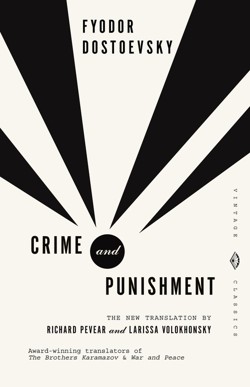
Crime and Punishment
Loading...
Meditations
Loading...
The Iliad
Loading...
A Poetry Handbook
Loading...
Romeo and Juliet
Loading...
![How to Read Literature Like a Professor [Third Edition]](https://image-server.worldofbooks.com/images/9780063307742_thumbnail.jpg)
Romeo and Juliet (No Fear Shakespeare)
Loading...
Much Ado About Nothing
Loading...
-
 Active Reading
-
 British Fictions of the Sixties
-
 Intention and Text
-
 Coleridge, Romanticism and the Orient
-
 Maggie Gee: Writing the Condition-of-England Novel
-
 Early Modern Writing and the Privatization of Experience
-
 Coleridge and German Philosophy
-
 Michel Houellebecq and the Literature of Despair
-
 The South Pacific Narratives of Robert Louis Stevenson and Jack London
-
 Ted Hughes, Class and Violence
-
 Salman Rushdie and Translation
-
 Coleridge and Kantian Ideas in England, 1796-1817
-
 Encountering Buddhism in Twentieth-Century British and American Literature
-
 Blake and Kierkegaard
-
 Canonizing Hypertext
-
 Irish Literature in the Celtic Tiger Years 1990 to 2008
-
 Bret Easton Ellis's Controversial Fiction
-
 Troubling Legacies
-
 Dickens, Journalism, Music
-
 Contemporary Caribbean Writing and Deleuze
-
 Neo-Victorianism and the Memory of Empire
-
 Mapping the Wessex Novel
-
 Character and Satire in Post War Fiction
-
 Pastoral Elegy in Contemporary British and Irish Poetry
-
 Postmodern Science Fiction and Temporal Imagination
-
 London Gothic
-
 The Palimpsest: Literature, Criticism, Theory
-
 Post-War British Women Novelists and the Canon
-
 Milton, Evil and Literary History
-
 Kurt Vonnegut and the American Novel
-
 Religion, Literature and the Imagination
-
 J. M. Coetzee in Context and Theory
-
 London Narratives
-
 Elizabeth Barrett Browning and Shakespeare
-
 Beckett and Decay
-
 Dickens, Christianity and 'The Life of Our Lord'
-
 Weakness: A Literary and Philosophical History
-
 Mapping World Literature
-
 Beckett and Ethics
-
 Joyce and Company
-
 Doris Lessing
-
 Melville, Mapping and Globalization
-
 Revisions of the American Adam
-
 Male Jealousy
-
 Fictions of Globalization
-
 Postmodern Fiction and the Break-Up of Britain


Her study will be welcomed by many women who have also read and enjoyed 'middlebrow' novels alongside 'highbrow' counterpartsIt reveals the cultural currency of feminine popular fictions, and elucidates the pleasures they offer, without denying their occasionally serious limitations. * Times Literary Supplement *
Deborah Phillips has produced a most welcome addition to the existing critical work on the "woman's novel", which is to say the novel written by women that constructs its readers as feminine...Women's Fiction 1945-2005 uses many of the approaches that we have come to associate with Cultural Studies and offers an enjoyable sense of time travel for those who are old enough to remember the decades in the second half of the twentieth century... * Maroula Joannou, Contemporary Women's Writing *
"Deborah Philips' study...is an invaluable text, deftly weaving literary history with cultural critique, social commentary, feminist analysis. Philips has achieved something truly remarkable in this intelligent, savvy, and provocative work of literary and cultural inspiration." - Dr. Suzette Henke, Thruston B. Morton, Sr. Professor of English, University of Louisville, USA
"Deborah Philips' study of what she terms women's "domestic romance" from 1945 to 2005 is both entertaining and perceptive, at once engaging and nicely judged. She looks at the shifting sub-genres through the decades, amongst others, single mother novels in the sixties, sex and shopping fiction in the eighties, aga sagas in the nineties, and chick-lit up to the present day. This is a welcome addition to feminist engagement in the field. Astute, full of sharp political insights and alert to recent cultural theory, it is a sparkling and persuasive account of the changing concerns and tropes of women's popular fiction." - Professor Helen Carr, Goldsmiths College, University of London, UK.
Women writers of "middlebrow" fiction have often been disregarded in terms of both the literary canon and feminists who otherwise support and promote the writings of women. The truths these popular writers wrote about were dismissed because the books were written in the "correct" way, the way that appealed to literary circles. Philips sought to change this perception with the first edition of this book, in which she discussed, decade by decade, the important and emerging themes of women's popular fiction alongside the themes of the literary works of the day … This updated edition carries the reader to 2014, covering the current popular novels that depict women "having it all" and the "spiritual quest" story. Philips's opinion of the popular novel takes a more negative turn with these mass market–produced books, obviously written to capitalize on one success in the field, and she raises new questions about how writing for women is marketed today. The book contains an expanded bibliography and interesting new content. Summing Up: Recommended. Lower- and upper-division undergraduates; graduate students; professionals; general readers. -- R. Stone, Mt. St. Joseph University * CHOICE *
Deborah Phillips has produced a most welcome addition to the existing critical work on the "woman's novel", which is to say the novel written by women that constructs its readers as feminine...Women's Fiction 1945-2005 uses many of the approaches that we have come to associate with Cultural Studies and offers an enjoyable sense of time travel for those who are old enough to remember the decades in the second half of the twentieth century... * Maroula Joannou, Contemporary Women's Writing *
"Deborah Philips' study...is an invaluable text, deftly weaving literary history with cultural critique, social commentary, feminist analysis. Philips has achieved something truly remarkable in this intelligent, savvy, and provocative work of literary and cultural inspiration." - Dr. Suzette Henke, Thruston B. Morton, Sr. Professor of English, University of Louisville, USA
"Deborah Philips' study of what she terms women's "domestic romance" from 1945 to 2005 is both entertaining and perceptive, at once engaging and nicely judged. She looks at the shifting sub-genres through the decades, amongst others, single mother novels in the sixties, sex and shopping fiction in the eighties, aga sagas in the nineties, and chick-lit up to the present day. This is a welcome addition to feminist engagement in the field. Astute, full of sharp political insights and alert to recent cultural theory, it is a sparkling and persuasive account of the changing concerns and tropes of women's popular fiction." - Professor Helen Carr, Goldsmiths College, University of London, UK.
Women writers of "middlebrow" fiction have often been disregarded in terms of both the literary canon and feminists who otherwise support and promote the writings of women. The truths these popular writers wrote about were dismissed because the books were written in the "correct" way, the way that appealed to literary circles. Philips sought to change this perception with the first edition of this book, in which she discussed, decade by decade, the important and emerging themes of women's popular fiction alongside the themes of the literary works of the day … This updated edition carries the reader to 2014, covering the current popular novels that depict women "having it all" and the "spiritual quest" story. Philips's opinion of the popular novel takes a more negative turn with these mass market–produced books, obviously written to capitalize on one success in the field, and she raises new questions about how writing for women is marketed today. The book contains an expanded bibliography and interesting new content. Summing Up: Recommended. Lower- and upper-division undergraduates; graduate students; professionals; general readers. -- R. Stone, Mt. St. Joseph University * CHOICE *
Deborah Philips is Professor of Literature and Cultural History at the University of Brighton, UK. Her books include Fairground Attractions (2012), The Trojan Horse (2013) with Garry Whannel and Brave New Causes (1999) with Ian Haywood.
| SKU | Unavailable |
| ISBN 13 | 9781441104267 |
| ISBN 10 | 1441104267 |
| Title | Women's Fiction |
| Author | Deborah Philips |
| Series | Continuum Literary Studies |
| Condition | Unavailable |
| Binding Type | Paperback |
| Publisher | Bloomsbury Publishing Plc |
| Year published | 2014-06-19 |
| Number of pages | 224 |
| Cover note | Book picture is for illustrative purposes only, actual binding, cover or edition may vary. |
| Note | Unavailable |
Customers who bought this item also bought
Crime and Punishment
Loading...
Meditations
Loading...
The Iliad
Loading...
A Poetry Handbook
Loading...
Romeo and Juliet
Loading...
Romeo and Juliet (No Fear Shakespeare)
Loading...
Much Ado About Nothing
Loading...
The World of Ice and Fire
Loading...
The Iliad of Homer
Loading...
The Odyssey SparkNotes Literature Guide
Loading...
The Prince
Loading...
The Merchant of Venice
Loading...
Twelfth Night
Loading...
Existentialism Is a Humanism
Loading...
The Wind in the Willows
Loading...
The Best Part of Me
Loading...
Hamlet
Loading...
A Hobbit, a Wardrobe, and a Great War
Loading...
Macbeth (No Fear Shakespeare)
Loading...
Othello
Loading...
Julius Caesar (No Fear Shakespeare)
Loading...