World Without End by Hugh Thomas
The legacy of imperial Spain was shaped by many hands. Chief among them is the towering figure of King Philip II, the cultivated Spanish monarch whom a contemporary once called the arbiter of the world. Cheerful and pious, he inherited vast authority from his father, but nevertheless felt himself unworthy to wield it. His forty-two-year reign changed the face of the globe forever. Alongside Philip we find the entitled descendants of New Spain's original explorers--men who, like their king, came into possession of land they never conquered and wielded supremacy they never sought. Here too are the Roman Catholic religious leaders of the Americas, whose internecine struggles created possibilities that the emerging Jesuit order was well-positioned to fill. With the sublime stories of arms and armadas, kings and conquistadors come tales of the ridiculous: the opulent parties of New Spain's wealthy hedonists and the unexpected movement to encourage Philip II to conquer China. Finally, Hugh Thomas unearths the first indictments of imperial Spain's labor rights abuses in the Americas--and the early attempts by its more enlightened rulers and planters to address them. Written in the brisk, flowing narrative style that has come to define Hugh Thomas's work, the final volume of this acclaimed trilogy stands alone as a history of an empire making the transition from conquest to inheritance--a history that Thomas reveals through the fascinating lives of the people who made it.You might also like
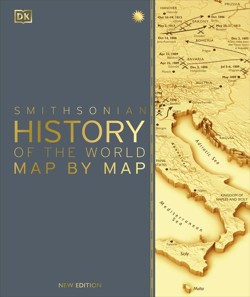
History of the World Map by Map
Loading...
The Book Thief
Loading...
The Gales of November
Loading...
The Art of War
Loading...
The The Case for Trump
Loading...

The Emperor of All Maladies
Loading...
This is history as it used to be: adventurous men (and a few women), masses of action, little analysis but racy gossip and colourful scene settingWe could often be reading one of the tales the colonists themselves sent back -- Jeremy Treglown * Daily Telegraph *
Literary power is a vital part of a great historian's armoury. As in his earlier books, Thomas demonstrates here that he has this in abundance. But equally important is [his] sense of perspective ... With all its flaws, Thomas argues, the Spanish Empire left an extraordinarily rich legacy -- Christopher Silvester * Financial Times *
World Without End is full of illuminating detail, drawn from painstaking work * Economist *
Hugh Thomas (1931-2017) was the author of, among other books, The Spanish Civil War (1961), which won the Somerset Maugham Award, The Suez Affair (1967), Cuba: The Pursuit of Freedom (1971), An Unfinished History of the World (1979), Armed Truce (1986), Conquest: Montezuma, Cortés and the Fall of Old Mexico (1994), The Slave Trade (1997) and the first two volumes of his Spanish Empire trilogy, Rivers of Gold (2003) and The Golden Age (2010). From 1966 to 1976 he was Professor of History at the University of Reading, and from 1979 to 1991 chairman of the Centre for Policy Studies in London. In 2008 he was made a Commandeur de l'Ordre des Arts et des Lettres (France) and won the Gabarrón Prize; he received the Calvo Serer Prize, the Boccaccio Prize and the Nonino Prize in Italy in 2009. He was a member of the Academia de Buenas Letras in Seville and a Caballero of the Maestranza of Ronda, and in 1981 became a life peer as Lord Thomas of Swynnerton.
| SKU | Unavailable |
| ISBN 13 | 9780141034478 |
| ISBN 10 | 0141034475 |
| Title | World Without End |
| Author | Hugh Thomas |
| Condition | Unavailable |
| Binding Type | Paperback |
| Publisher | Penguin Books Ltd |
| Year published | 2015-07-02 |
| Number of pages | 496 |
| Cover note | Book picture is for illustrative purposes only, actual binding, cover or edition may vary. |
| Note | Unavailable |
Customers who bought this item also bought
Revolution
Loading...
The Book Thief
Loading...
Confronting America
Loading...
The Gales of November
Loading...
Black AF History
Loading...
The The Case for Trump
Loading...
The Emperor of All Maladies
Loading...
Genealogy Basics In 30 Minutes
Loading...

The Fate of the Day
Loading...

The Greatest Sentence Ever Written
Loading...

1776
Loading...
Women Holding Things
Loading...
Democracy Awakening
Loading...
The Wreck of the Mentor
Loading...
Bad Law
Loading...