X-Ray Crystallography by William Clegg
X-ray crystallography, a powerful technique for structure determination, plays a major role in modern research. This primer gives a concise and accessible account of the technique, emphasising its wide-ranging practical application to engineering and the physical and biological sciences.You might also like
Organic Chemistry as a Second Language
Chemistry Made Easy
Organic Chemistry I For Dummies
Periodic Table Advanced
Environmental Science for the AP Course
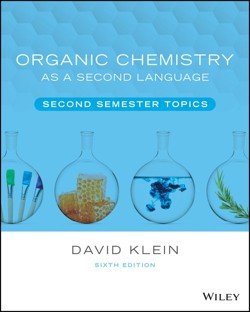
Organic Chemistry as a Second Language
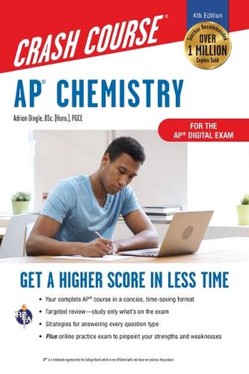
AP Chemistry Crash Course, Book + Online
Visual Learning: Chemistry
Reactions
Organic Chemistry I Workbook For Dummies
Calculations in Chemistry
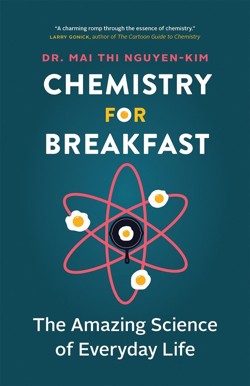
Chemistry for Breakfast
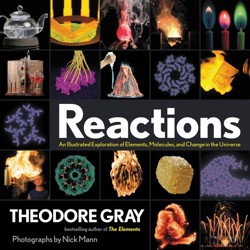
Reactions
-
 Foundations of Organic Chemistry
-
 Chemical Bonding
-
 Aromatic Heterocyclic Chemistry
-
 Nuclear Magnetic Resonance
-
 Introduction to Organic Spectroscopy
-
 Periodicity and the s- and p-Block Elements
-
 Organic Synthesis
-
 Foundations of Science Mathematics
-
 d-Block Chemistry
-
 Aromatic Chemistry
-
 Mechanisms of Organic Reactions
-
 Introduction to Quantum Theory and Atomic Structure
-
 Essentials of Inorganic Chemistry 1
-
 Foundations of Physics for Chemists
-
 Electrode Potentials
-
 Surfaces
-
 Energy Levels in Atoms and Molecules
-
 Inorganic Spectroscopic Methods
-
 Inorganic Materials Chemistry
-
 The Mechanisms of Reactions at Transition Metal Sites
-
 Foundations of Chemical Biology
-
 NMR Spectroscopy in Inorganic Chemistry
-
 Stereoelectronic Effects
-
 Organometallic Reagents in Synthesis
-
 Chemical Reaction Engineering
-
 Introduction to Molecular Symmetry
-
 Carbohydrate Chemistry
-
 Computational Chemistry
-
 Biocoordination Chemistry
-
 Photochemistry
-
 Electrode Dynamics
-
 Organometallics 1
-
 The f Elements
-
 Top Drugs: Top Synthetic Routes
-
 Polar Rearrangements
-
 Foundations of Physical Chemistry: Worked Examples
-
 Molecular Spectroscopy
-
 Oxidation and Reduction in Organic Synthesis
-
 Quantum Mechanics 1
-
 Modern Liquid Phase Kinetics


The first edition was excellent and great value for money, and so became the mainstay of my recommendations to undergraduates in their core inorganic chemistry courses for many years. Now here is the second edition. It is an honour to be asked to review such a successful teaching book. * John R. Helliwell, Acta Cryst. (2017). A73, 8384 *
I highly recommend this book to lecturers describing the topic of X-ray crystallography to undergraduate core inorganic chemists as well as to the students themselves taking such a course, who should also rightly consider it a bargain at the price. * John R. Helliwell, Acta Cryst. (2017). A73, 8384 *
This book is a superb brief overview of X-ray crystallography. * Petra Bombicz, Crystallography Reviews 22:1, 79-81, 2016 *
The description of the diffraction of X-rays by molecules and crystals, and presentation of the crystal structure solution are explained so clearly that it provides an exquisite basis of in-depth understanding. * Petra Bombicz, Crystallography Reviews 22:1, 79-81, 2016 *
This book needs to be on your bookshelf if you are not a professor of crystallography, but also if you are a professor of crystallography in order to give it to your students and colleagues. * Petra Bombicz, Crystallography Reviews 22:1, 79-81, 2016 *
The focus is firmly on the use of x-ray crystallography in chemistry, with the bread-and-butter topic of routine structure determination using in-house equipment being the chief subject. The text is therefore of worldwide appeal, wherever this subject forms part of mainstream chemistry teaching. * Christine Cardin, Chemistry World, September 2015 *
While there are many accounts of diffraction methods, there are few written so clearly from this perspective and that emphasise the features or issues which arise when analysing typical small molecule crystals. * Christine Cardin, Chemistry World, September 2015 *
Clegg draws on his own experience to provide illustrative examples - no doubt being useful for students and teachers alike. * Christine Cardin, Chemistry World, September 2015 *
X-ray crystallography is very focused, as it should be, on the needs of students, and can be confidently recommended to this audience. * Christine Cardin, Chemistry World, September 2015 *
William Clegg QC is one of England's most well-known criminal lawyers. He has fought more than 100 murder cases than anyone other practicing at the English bar, having been a barrister for 47 years. He has represented clients in some of the most well-known criminal trials in recent memory as London's leading murder case layer. Rachel Nickell's murder on Wimbledon Common; the Chillenden murders (Doctor Lin and Megan Russell); the Earprint murder; Private Lee Clegg (Northern Ireland); the murder of Joanna Yeates; Nazi war crimes in Britain; Rebekah Brooks's phone hacking trial; and the international war crimes tribunal (Yugoslavia) are among his cases. He is the head of chambers at 2 Bedford Row in London.
| SKU | Unavailable |
| ISBN 13 | 9780198700975 |
| ISBN 10 | 0198700970 |
| Title | X-Ray Crystallography |
| Author | William Clegg |
| Series | Oxford Chemistry Primers |
| Condition | Unavailable |
| Binding Type | Paperback |
| Publisher | Oxford University Press |
| Year published | 2015-05-21 |
| Number of pages | 128 |
| Cover note | Book picture is for illustrative purposes only, actual binding, cover or edition may vary. |
| Note | Unavailable |
Customers who bought this item also bought
Organic Chemistry as a Second Language
Chemistry Made Easy
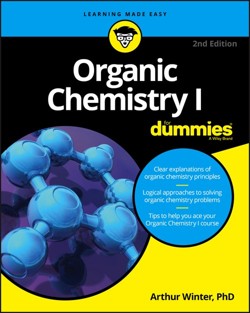
Organic Chemistry I For Dummies
Periodic Table Advanced
Organic Chemistry as a Second Language
Visual Learning: Chemistry
Rocks & Minerals of Washington and Oregon
Reactions
The Elements
AP Chemistry Crash Course, Book + Online
Reactions
Organic Chemistry
The Chemistry Book
Organic Chemistry II For Dummies
Organic Chemistry
Chemistry
Laboratory Techniques in Organic Chemistry
Organic Chemistry Made Ridiculously Simple
Chemistry
ISE ORGANIC CHEMISTRY
Chemistry 2
Chemistry
The Catalyst
Introductory Chemistry: A Foundation
Chemistry (AP Edition)