Numerical Modeling in Materials Science and Engineering by Michel Rappaz
This book introduces the concepts and methodologies related to the modelling of the complex phenomena occurring in materials processing. After a short reminder of conservation laws and constitutive relationships, the authors introduce the main numerical methods: finite differences, finite volumes and finite elements. These techniques are developed in three main chapters of the book that tackle more specific problems: phase transformation, solid mechanics and fluid flow. The two last chapters treat inverse methods to obtain the boundary conditions or the material properties and stochastic methods for microstructural simulation. This book is intended for undergraduate and graduate students in materials science and engineering, mechanical engineering and physics and for engineering professionals or researchers who want to get acquainted with numerical simulation to model and compute materials processing.You might also like
Engineering Technologies


The Last Ten Years
Engineering Thermodynamics


Heat Treatment
Mechanical Engineer's Data Handbook
The Haynes Manual on Welding

Fundamentals of Aerodynamics ISE
Welding For Dummies
Engineering in Emergencies
What Engineers Know and How They Know It
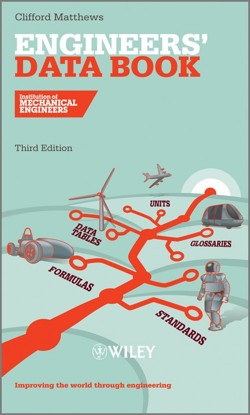
Engineers' Data Book

Handmade
The Beginner's Guide to Engineering
-
 Numerical Analysis for Elliptic Optimal Control Problems
-
 Introduction to Shape Optimization
-
 Numerical Methods for Two-phase Incompressible Flows
-
 Time-Domain Finite Element Methods for Maxwell's Equations in Metamaterials
-
 Spectral Methods
-
 The Graduate Student's Guide to Numerical Analysis '98
-
 The Linearization Method for Constrained Optimization
-
 Hilbert Space Splittings and Iterative Methods
-
 The Concept of Stability in Numerical Mathematics
-
 Monotone Discretizations for Elliptic Second Order Partial Differential Equations
-
 Boundary Element Methods
-
 History of Continued Fractions and Padé Approximants
-
 Method of Difference Potentials and Its Applications
-
 Newton Methods for Nonlinear Problems
-
 High Order Difference Methods for Time Dependent PDE
-
 Logarithmic Norms
-
 Minimization Methods for Non-Differentiable Functions
-
 Numerical Toolbox for Verified Computing I
-
 Hierarchical Matrices: Algorithms and Analysis
-
 Mixed and Hybrid Finite Element Methods
-
 Solving Elliptic Problems Using ELLPACK
-
 Discrete Iterations
-
 Numerical Techniques for Stochastic Optimization
-
 Numerical Continuation Methods
-
 Krylov Methods for Nonsymmetric Linear Systems
-
 Progress in Approximation Theory
-
 Sequence Transformations
-
 Nonlinear Approximation Theory
-
 Moduli of Smoothness
-
 Numerical Methods Based on Sinc and Analytic Functions
-
 Krylov Subspace Methods for Linear Systems
-
 Advanced Boundary Element Methods
-
 Retarded Potentials and Time Domain Boundary Integral Equations
-
 Robust Numerical Methods for Singularly Perturbed Differential Equations
-
 Finite Element Methods for Incompressible Flow Problems
-
 Solving Ordinary Differential Equations I
-
 Solving Ordinary Differential Equations II
-
 Tensor Spaces and Numerical Tensor Calculus
-
 Matrix Iterative Analysis


From the reviews:
"The book offers an impressive and excellent overview of a large variety of important aspects in the broad field of numerical modelling in material science and engineeringThe authors included many meaningful and scientifically interesting examples. These are very valuable not only for students … but also for the advanced computationally-oriented reader interested looking into new areas of research. … To conclude, the book is highly recommendable to advanced students as well as scientists in the fields of engineering and material science." (Technische Mechanik, Vol. 24 (3-4), 2004)
"The book under review is devoted to the numerical simulation and modeling in (especially) materials science and engineering. It aims at familiarizing the materials scientists and engineers with the numerical methods and techniques that are state-of-the-art in this subject. … this is a well written and well-organized reference book that will hopefully prove to be indispensable, especially for those materials scientists and engineers whose investigations make use of the various numerical methods and techniques developed in this book." (HM Srivastava, Applied Mechanics Reviews, Vol. 56 (6), November, 2003)
"This book is essentially devoted to numerical simulation and modeling in engineering and materials science. … this book is written to meet the needs of a textbook at the undergraduate and graduate levels in materials science and engineering. It may also be useful for researchers and engineering professionals who are interested in numerical methods, numerical simulation and modeling in engineering and materials science. … Summarizing, this book is an important addition to the literature on material science." (L. Debnath, Zentralblatt MATH, Vol. 1024, 2003)
"This book is devoted to numerical simulation and modeling in materials science and engineering. The aim of the monograph is to acquaint the materials science student orthe engineer with the numerical methods which are state-of-the-art in this subject … . The book is written at an introductory level and goes directly to the point. It should be recommended to students in material science and engineers who are either new in this field or want to get acquainted with numerical methods." (Jean-Luc Guermond, Mathematical Reviews, 2003 h)
“This is a carefully constructed introduction to the techniques and applications of numerical modelling in materials science and engineering. … The layout of the text is clear and the order of presentation of material is logical. … The advantage, of course, is that the book will survive changes in programming languages and fashions, and hold its value both as a textbook for undergraduates and graduates and as a reference.” (A. H. Harker, Contemporary Physics, February, 2012)
| SKU | Unavailable |
| ISBN 13 | 9783642118203 |
| ISBN 10 | 3642118208 |
| Title | Numerical Modeling in Materials Science and Engineering |
| Author | Michel Rappaz |
| Series | Springer Series In Computational Mathematics |
| Condition | Unavailable |
| Binding Type | Paperback |
| Publisher | Springer |
| Year published | 2010-05-13 |
| Number of pages | 540 |
| Cover note | Book picture is for illustrative purposes only, actual binding, cover or edition may vary. |
| Note | Unavailable |
Customers who bought this item also bought
Engineering Technologies
The Last Ten Years
Engineering Thermodynamics
Heat Treatment
Mechanical Engineer's Data Handbook
The Haynes Manual on Welding
Fundamentals of Aerodynamics ISE
Welding For Dummies
Engineering in Emergencies
What Engineers Know and How They Know It
Engineers' Data Book
Handmade
The Beginner's Guide to Engineering
An Introduction to the Mechanics of Machines
Principles of Control Engineering

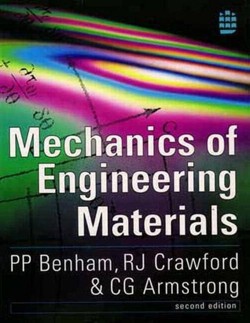
Mechanics of Engineering Materials
Engineering Thermodynamics
Perry's Chemical Engineers' Handbook
Materials
From Calculus to Chaos

Genius, Richard Trevithick's Steam Engines
Hydraulics and Pneumatics
Thermodynamics For Dummies
Tomorrow's Materials
Statics For Dummies

Diesel Troubleshooter for Boats

Furniture Design, second edition

Outboard Troubleshooter
Theory of Wing Sections
Geometry of Sheet Metal Work, The
How Things Work 2nd Edition

A Guide to the Collision Avoidance Rules