Machine Learning for Microbiome Statistics by Yinglin Xia
Machine learning fundamentally learns from the past experiences (seen data) to make predictions about future (unseen data). Predictions in nature are often uncertain. Microbiome data have unique characteristics, including high-dimensionality, over-dispersion, sparsity and zero-inflation, and heterogeneity. Thus, machine learning involving microbiome data for predicting the outcome of phenotypes is even more uncertain than learning those data from other fields. Machine Learning for Microbiome Statistics poses many challenges for evaluating the prediction performance using appropriate metrics and independent data validation.
This unique book aims to address the challenges of machine learning statistics, emphasize the importance of performance valuation by appropriate metrics and independent data, and describe several important concepts of machine learning statistics, such as feature engineering and overfitting. It comprehensively reviews commonly used and newly developed machine learning models for microbiome research. Specifically, this book provides the step-by-step procedures to perform machine learning of microbiome data, including feature engineering, algorithm selection and optimization, performance evaluation and model testing. It comments the benefits and limitations of using machine learning for microbiome statistics and remarks on the advantages and disadvantages of each machine learning algorithm.
It will be an excellent reference book for students and academics in the field.
- Presents a thorough overview of machine learning algorithms for microbiome statistics.
- Performs step-by-step procedures to perform machine learning of microbiome data, using important supervised learning algorithms, including classical, ensemble learning and tree-based models.
- Describes important concepts of machine learning, including bias and variance tradeoff, accuracy and precision, overfitting and underfitting, model complexity and interpretability, and feature engineering.
- Investigates and applies various cross-validation techniques step-by-step.
- Introduces confusion matrix and its derived measures. Comprehensively describes the properties of F1, Matthews’ correlation coefficient (MCC), area under the receiver operating characteristic curve (AUC-ROC), and area under the precision-recall curve (AUC-PR), as well as discusses their advantages and disadvantages when using them for microbiome data.
- Offers all related R codes and the datasets from the authors’ first-hand microbiome research and publicly available data.
You might also like

Actually useful algebra


Geometry Part 1
Word Problems, Grade 3

Math Refresher for Adults
Math Games with Bad Drawings
Math Common Core 6th Grade
Word Problems, Grade 4
Trigonometry
-
 R for Health Technology Assessment
-
 Value of Information for Healthcare Decision-Making
-
 Bayesian Models in Health Technology Assessment
-
 Statistical Methods for Immunogenicity Assessment
-
 Randomization, Masking, and Allocation Concealment
-
 Exposure-Response Modeling
-
 Mixture Modelling for Medical and Health Sciences
-
 Data Analysis with Competing Risks and Intermediate States
-
 Statistics In the Pharmaceutical Industry
-
 Design and Analysis of Bioavailability and Bioequivalence Studies
-
 Mixed Effects Models for the Population Approach
-
 Multiple Testing Problems in Pharmaceutical Statistics
-
 Master Protocol Clinical Trials for Evidence Generation
-
 Does This Treatment Cause That Outcome?
-
 Comparative Effectiveness and Personalized Medicine Research Using Real-World Data
-
 Age-Period-Cohort Models
-
 Biostatistics for Bioassay
-
 Statistical Methods for Survival Trial Design
-
 Every Coin Has Two Sides
-
 Group Sequential and Adaptive Methods for Clinical Trials
-
 Empirical Likelihood Method in Survival Analysis
-
 Multiregional Clinical Trials for Simultaneous Global New Drug Development
-
 Adaptive Design Methods in Clinical Trials
-
 Clinical Trial Data Analysis Using R and SAS
-
 Bayesian Cost-Effectiveness Analysis of Medical Treatments
-
 Statistical Methods for Drug Safety
-
 Emerging Non-Clinical Biostatistics in Biopharmaceutical Development and Manufacturing
-
 Design & Analysis of Clinical Trials for Economic Evaluation & Reimbursement
-
 Meta-Analysis in Medicine and Health Policy
-
 Model-Assisted Bayesian Designs for Dose Finding and Optimization
-
 Statistical Methods in Drug Combination Studies
-
 Design and Analysis of Clinical Trials for Predictive Medicine
-
 Frailty Models in Survival Analysis
-
 Bayesian Methods in Health Economics
-
 Survival Analysis in Medicine and Genetics
-
 Clinical Trial Methodology
-
 Applied Surrogate Endpoint Evaluation Methods with SAS and R
-
 Repeated Measures Design with Generalized Linear Mixed Models for Randomized Controlled Trials
-
 Design and Analysis of Animal Studies in Pharmaceutical Development


Dr. Yinglin Xia is a Clinical Professor in the Department of Medicine at the University of Illinois Chicago. He has published six books on statistical analysis of microbiome and metabolomics data and more than 180 statistical methodology and research papers in peer-reviewed journals. He serves on the editorial boards of several scientific journals including as an Associate Editor of Gut Microbes and has served as a reviewer for over 100 scientific journals.
Dr. Jun Sun is a tenured Professor of Medicine at the University of Illinois Chicago and an internationally recognized expert on microbiome and human diseases, e.g., vitamin D receptor in inflammation, dysbiosis and intestinal dysfunction in amyotrophic lateral sclerosis (ALS). Her lab is the first to discover that chronic effects and molecular mechanisms of Salmonella infection and risk of colon cancer. Dr. Sun has published over 260 scientific articles in peer-reviewed journals and 10 books on microbiome.
| SKU | Unavailable |
| ISBN 13 | 9781041005247 |
| ISBN 10 | 1041005245 |
| Title | Machine Learning for Microbiome Statistics |
| Author | Yinglin Xia |
| Series | Chapman And Hall Crc Biostatistics Series |
| Condition | Unavailable |
| Binding Type | Hardback |
| Publisher | Chapman and Hall/CRC |
| Year published | 2026-01-24 |
| Cover note | Book picture is for illustrative purposes only, actual binding, cover or edition may vary. |
| Note | Unavailable |
Customers who bought this item also bought


Word Problems, Grade 3

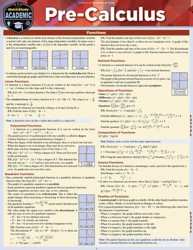
Pre - Calculus
Math Refresher for Adults
Math Games with Bad Drawings
Word Problems, Grade 4

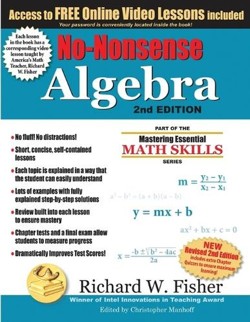
No-Nonsense Algebra, 2nd Edition
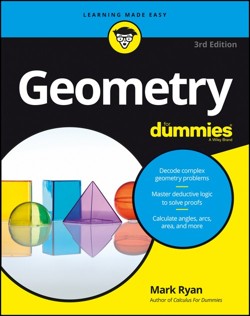
Geometry For Dummies
Calculus Equations & Answers
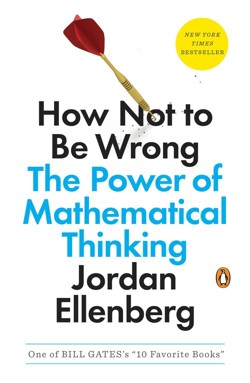


Quadrivium
Trigonometry
Math Common Core 6th Grade

College Algebra
Calculus For Dummies
Math Mammoth Grade 3-A Worktext


Calculus
Basic Math & Pre-Algebra Workbook For Dummies with Online Practice

Algebraic Equations
Word Problems, Grade 5