Numerical Methods for Partial Differential Equations by G Evans
The subject of partial differential equations holds an exciting and special position in mathematics. Partial differential equations were not consciously created as a subject but emerged in the 18th century as ordinary differential equations failed to describe the physical principles being studied. The subject was originally developed by the major names of mathematics, in particular, Leonard Euler and Joseph-Louis Lagrange who studied waves on strings; Daniel Bernoulli and Euler who considered potential theory, with later developments by Adrien-Marie Legendre and Pierre-Simon Laplace; and Joseph Fourier's famous work on series expansions for the heat equation. Many of the greatest advances in modern science have been based on discovering the underlying partial differential equation for the process in question. James Clerk Maxwell, for example, put electricity and magnetism into a unified theory by establishing Maxwell's equations for electromagnetic theory, which gave solutions for prob- lems in radio wave propagation, the diffraction of light and X-ray developments. Schrodinger's equation for quantum mechanical processes at the atomic level leads to experimentally verifiable results which have changed the face of atomic physics and chemistry in the 20th century. In fluid mechanics, the Navier- Stokes' equations form a basis for huge number-crunching activities associated with such widely disparate topics as weather forecasting and the design of supersonic aircraft. Inevitably the study of partial differential equations is a large undertaking, and falls into several areas of mathematics.You might also like

Actually useful algebra
Loading...





Quadrivium
Loading...
Word Problems, Grade 3
Loading...
Big Ideas Math: Modeling Real Life - Grade 6 Advanced Student Edition
Loading...
More editions available


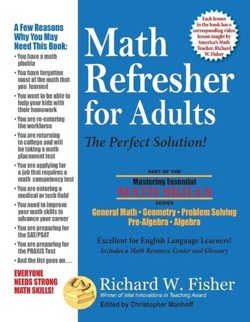
Math Refresher for Adults
Loading...
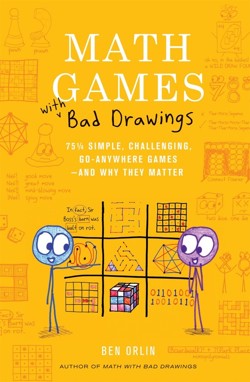
Math Games with Bad Drawings
Loading...
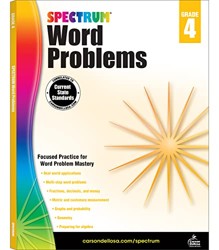
Word Problems, Grade 4
Loading...
-
 Introductory Mathematics: Algebra and Analysis
-
 Elementary Number Theory
-
 Vector Calculus
-
 Real Analysis
-
 Basic Linear Algebra
-
 Basic Stochastic Processes
-
 Mathematics for Finance
-
 Metric Spaces
-
 Measure, Integral and Probability
-
 Groups, Rings and Fields
-
 Complex Analysis
-
 An Introduction to Laplace Transforms and Fourier Series
-
 Abstract Algebra
-
 Galois Theory Through Exercises
-
 Special Relativity
-
 Geometry
-
 Analytic Methods for Partial Differential Equations
-
 An Invitation to Representation Theory
-
 Sets, Logic and Categories
-
 Information and Coding Theory
-
 A First Course in Discrete Mathematics
-
 Numerical Methods for Ordinary Differential Equations
-
 Mathematical Writing
-
 Essential Topology
-
 Elements of Logic via Numbers and Sets
-
 Mathematical Tapas
-
 Applied Geometry for Computer Graphics and CAD
-
 Fundamental Mathematical Analysis
-
 Worlds Out of Nothing
-
 Algebraic Number Theory
-
 Elements of Abstract Analysis
-
 Essential Mathematical Biology
-
 Calculus of One Variable
-
 General Relativity
-
 Exploring Mathematics
-
 The Group Theory Puzzle Book
-
 A Journey Through The Realm of Numbers
-
 Intuitionistic Analysis
-
 Algebra for Applications
-
 From Real to Complex Analysis
-
 A One-Semester Course on Probability
-
 Fluid Dynamics and Linear Elasticity


| SKU | Unavailable |
| ISBN 13 | 9783540761259 |
| ISBN 10 | 354076125X |
| Title | Numerical Methods for Partial Differential Equations |
| Author | G Evans |
| Series | Springer Undergraduate Mathematics Series |
| Condition | Unavailable |
| Binding Type | Paperback |
| Publisher | Springer-Verlag Berlin and Heidelberg GmbH & Co. KG |
| Year published | 1999-10-27 |
| Number of pages | 290 |
| Cover note | Book picture is for illustrative purposes only, actual binding, cover or edition may vary. |
| Note | Unavailable |
Customers who bought this item also bought
Actually useful algebra
Loading...
Quadrivium
Loading...
Word Problems, Grade 3
Loading...
Big Ideas Math: Modeling Real Life - Grade 6 Advanced Student Edition
Loading...
More editions available
Math Refresher for Adults
Loading...
Math Games with Bad Drawings
Loading...
Word Problems, Grade 4
Loading...

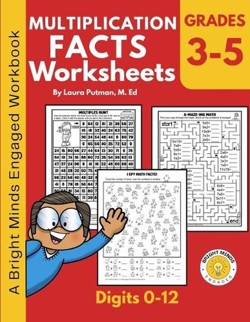
Multiplication Facts Worksheets
Loading...
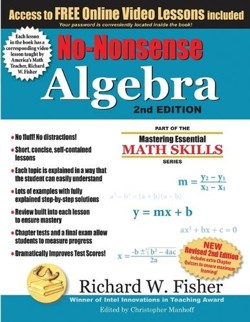
No-Nonsense Algebra, 2nd Edition
Loading...
Statistics For Dummies
Loading...
Geometry For Dummies
Loading...
Calculus Equations & Answers
Loading...

Pre - Calculus
Loading...

Math Common Core 6th Grade
Loading...

College Algebra
Loading...
Calculus For Dummies
Loading...
Trigonometry
Loading...

Calculus
Loading...
Basic Math & Pre-Algebra Workbook For Dummies with Online Practice
Loading...
More editions available
Algebraic Equations
Loading...
Word Problems, Grade 5
Loading...