Participatory Design Theory by Oswald Devisch
This book explores the role of participatory design in keeping these participatory processes public. It addresses four specific lines of enquiry: how can the use and development of technologies and social media help to diversify, coproduce, interrupt and document democratic design experiments.You might also like
House Hushing




A Field Guide to American Houses (Revised)

A Pattern Language
This Is Home

Eat, Drink, Nap



Beautiful

Take It Outside
The New Design Rules

Oasis

Goodbye, Things


At Home on the Water

Landscape Graphics

-
 Planning for Resilient Small and Medium-Sized Cities in Ghana
- Improvised Urbanism
-
 Waterfront Regeneration in a Time of Climate Change
- Governing Urban Densification Towards Social Sustainability
-
 Urban Planning’s Philosophical Entanglements
-
 Planning for a City of Culture
-
 Making Prestigious Places
-
 Markets, Politics and the Environment
-
 The Architecture of Phantasmagoria
-
 Neoliberal Spatial Governance
-
 Sustainable Regeneration of Former Military Sites
-
 The Empty Place
-
 Gentrification in Helsinki
-
 Exclusion in Smart Cities
-
 Rebuilding Urban Complexity
-
 Australia and China Perspectives on Urban Regeneration and Rural Revitalization
-
 City, Public Space, and Body
- Displaced Urbanism
- Resilient Urbanism
-
 Branded Heritage and Real Estate
-
 Mapping
- The City as a Commodity
-
 Urban Atmospheres between East and West
-
 Capital Cities: Varieties and Patterns of Development and Relocation
-
 Public Space and Relational Perspectives
-
 By-Right, By-Design
-
 Rebuilding Afghanistan in Times of Crisis
-
 Regeneration, Heritage and Sustainable Communities in Turkey
-
 Public Space, Peace, and Everyday Life
-
 Health, Diversity, and Temporary Appropriation in Public Space
-
 Contested Airport Land
-
 Reinventing the Chinese City
-
 Infrastructure and Planning in Central and Eastern Europe
-
 Transitory Urbanism
-
 The Protection of Green Spaces for Climate Change Adaptation
-
 Planning Digital Cities
-
 De-Siloing Urban Planning
-
 Urban Regeneration After Catastrophe
-
 The Politics of Road Expansion
-
 Chinese Collaborative Planning in the Digital Era
-
 Territorial Governance across Europe
-
 Cognition and the Built Environment
-
 Revolt and Reform in Architecture's Academy
-
 Unplugging the City
-
 Planning Urban Places
-
 Race, Faith and Planning in Britain


Oswald Devisch is Associate Professor in Urban Design at Hasselt University, Belgium. He is coordinator of the research cluster Spatial Capacity Building and explores themes such as collective learning, casual participation, autonomous urbanization and the gamification of participation.
Liesbeth Huybrechts is Associate Professor at Hasselt University, Belgium. She works in the areas of participatory design, spatial transformation processes and human-computer interaction. She is part of the research projects Traders and Critical Heritage. She designed the participatory mapping tool MAP-it (www.map-it.be) and is co-founder of Social Spaces (www.socialspaces.be).
Roel De Ridder is a researcher and a tutor at the Faculty of Architecture and Arts, Hasselt University, Belgium. He is also a lecturer in architectural theory and a tutor at the Faculty of Architecture at KU Leuven (in Brussels and Ghent). He attained a doctoral degree, on The Public Performance of the Parish Church, at Hasselt University (2013). His research focuses on supporting municipalities and church boards in developing and implementing policies and new architectural schemes regarding the future of church buildings. Since 2012, De Ridder has been artistic director of the architecture organisation Architectuurwijzer vzw (Hasselt, Belgium).
| SKU | Unavailable |
| ISBN 13 | 9781138087682 |
| ISBN 10 | 1138087688 |
| Title | Participatory Design Theory |
| Author | Oswald Devisch |
| Series | Routledge Research In Planning And Urban Design |
| Condition | Unavailable |
| Binding Type | Hardback |
| Publisher | Routledge |
| Year published | 2018-10-02 |
| Number of pages | 270 |
| Cover note | Book picture is for illustrative purposes only, actual binding, cover or edition may vary. |
| Note | Unavailable |
Customers who bought this item also bought
A Field Guide to American Houses (Revised)

A Pattern Language
This Is Home

Living with Pattern
Architecture: Form, Space, and Order
The New Design Rules

Goodbye, Things

Planting the Natural Garden

Great British Architecture

At Home on the Water


Landscape Graphics


BIG. Yes is More
Still


DISC Interiors: Portraits of Home
Take It Outside

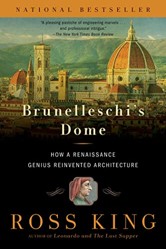
Brunelleschi's Dome

Anime Architecture



The Killer and Frank Lloyd Wright
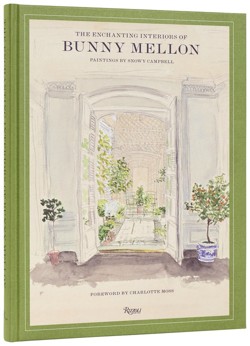
The Enchanting Interiors of Bunny Mellon


Professional Practice

Living with Color

F.L. Wright

Stories in Stone


Blenheim

Architecture

Why Buildings Stand Up


Complexity and Contradiction in Architecture


The Timeless Way of Building

Veranda American Style

Frank Lloyd Wright

French Country Cottage