Ideology in Britten's Operas by J P E Harper-Scott
This thematic examination of Britten's operas focuses on the way that ideology is presented on stage. To watch or listen is to engage with a vivid artistic testament to the ideological world of mid-twentieth-century Britain. But it is more than that, too, because in many ways Britten's operas continue to proffer a diagnosis of certain unresolved problems in our own time. Only rarely, as in Peter Grimes, which shows the violence inherent in all forms of social and psychological identification, does Britten unmistakably call into question fundamental precepts of his contemporary ideology. This has not, however, prevented some writers from romanticizing Britten as a quiet revolutionary. This book argues, in contrast, that his operas, and some interpretations of them, have obscured a greater social and philosophical complicity that it is timely - if at the same time uncomfortable - for his early twenty-first-century audiences to address.You might also like

Piano Adventures - Theory Book - Level 1
Loading...
Piano Adventures Lesson Book Primer Level
Loading...
Piano Adventures Theory Book Primer Level
Loading...

Piano Adventures Lesson Book 1
Loading...
Adult Piano Adventures All-In-One Book 1
Loading...
My First Piano Adventure Lesson Book C
Loading...
First 50 Songs
Loading...
Essential Elements 2000 for Strings - Book 2
Loading...

Sound Innovations Concert Band - Bb Clarinet
Loading...
Piano Adventures Lesson Book Level 2A
Loading...
-
 The Graph Music of Morton Feldman
-
 The Royal College of Music and its Contexts
-
 Stravinsky's Piano
-
 Prokofiev's Soviet Operas
-
 Yugoslav Avant-Garde Music, 1945–1991
-
 Music and Protest in 1968
-
 Musical Witness and Holocaust Representation
-
 Stravinsky and the Russian Period
-
 New Music at Darmstadt
-
 John Cage and David Tudor
-
 The Spectral Piano
-
 Britten's Unquiet Pasts
-
 Transformations of Musical Modernism
-
 French Music and Jazz in Conversation
-
 Music in Germany since 1968
-
 Schoenberg's Atonal Music
-
 Elliott Carter's Late Music
-
 Alan Bush, Modern Music, and the Cold War
-
 Performance Practice in the Music of Steve Reich
-
 John Cage and Peter Yates
-
 British Musical Modernism
-
 Schoenberg's Twelve-Tone Music
-
 Avant-Garde on Record
-
 Harrison Birtwistle's Operas and Music Theatre
-
 The Orchestral Music of Michael Tippett
-
 Luigi Dallapiccola and Musical Modernism in Fascist Italy
-
 Gerard Grisey and Spectral Music
-
 Lateness and Modernism
-
 Peter Maxwell Davies, Selected Writings
-
 The Musical Language of Pierre Boulez
-
 Luigi Nono


'The author is interested in Britten's ideology and studies this by focusing on the origins, nature, and structure of the ideas in the operasRecommended. Graduate students, researchers, faculty, professionals.' R. Pitts, Choice
'… deeply original and brilliantly wrought … Ideology in Britten's Operas is an intellectually stimulating achievement-agile in critical-theoretical perspective, musical in its score analyses, and engaging to read. It is also an ambitious book, seeking in Britten's operas a testing-ground for a broader ideologically framed criticism.' Philip Rupprecht, Music and Letters
'… deeply original and brilliantly wrought … Ideology in Britten's Operas is an intellectually stimulating achievement-agile in critical-theoretical perspective, musical in its score analyses, and engaging to read. It is also an ambitious book, seeking in Britten's operas a testing-ground for a broader ideologically framed criticism.' Philip Rupprecht, Music and Letters
Harper-Scott, J. P. E.: - J. P. E. Harper-Scott is Temporary Lecturer in Music at Royal Holloway, University of London. He studied at the University of Durham and at Magdalen College, Oxford. His essays on Elgar have been published in 19th-Century Music and Music Analysis, and he is a contributor to The Cambridge Companion to Elgar. He is the co-editor, with Julian Rushton, of an essay collection, Elgar Studies (Cambridge, 2007). This is his first book.
| SKU | Unavailable |
| ISBN 13 | 9781108402873 |
| ISBN 10 | 1108402879 |
| Title | Ideology in Britten's Operas |
| Author | J P E Harper-Scott |
| Series | Music Since 1900 |
| Condition | Unavailable |
| Binding Type | Paperback |
| Publisher | Cambridge University Press |
| Year published | 2020-10-29 |
| Number of pages | 345 |
| Cover note | Book picture is for illustrative purposes only, actual binding, cover or edition may vary. |
| Note | Unavailable |
Customers who bought this item also bought
Piano Adventures - Theory Book - Level 1
Loading...
Piano Adventures Lesson Book Primer Level
Loading...
Piano Adventures Theory Book Primer Level
Loading...
Piano Adventures Lesson Book 1
Loading...
Adult Piano Adventures All-In-One Book 1
Loading...
My First Piano Adventure Lesson Book C
Loading...
First 50 Songs
Loading...
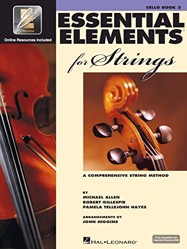
Essential Elements 2000 for Strings - Book 2
Loading...
Sound Innovations Concert Band - Bb Clarinet
Loading...
Piano Adventures Lesson Book Level 2A
Loading...

Bastien Piano Basics: Technic Level 1
Loading...
FunTime Piano Classics Level 3A-3B
Loading...
Piano Adventures Lesson Book Level 2B
Loading...
Piano Adventures Lesson Book Level 5
Loading...
First 50 Rock Songs
Loading...

My First Piano Adventure Writing Book A
Loading...
Alfred's Basic Piano Library Prep Course
Loading...
Hal Leonard Guitar Method
Loading...
Guitar Aerobics
Loading...

Rubank Elementary Method - Saxophone
Loading...
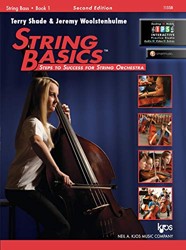
String Basics Book 1 String Bass
Loading...
AlfredAs Basic Piano Library Hymn Book 1A
Loading...

Piano Adventures Performance Book Level 2A
Loading...