Managing Complexity in Software Engineering by Rj Mitchell
Software engineering products are becoming ever more complex, because software is being used in the solution of more technically difficult problems and because the size of software projects continues to grow. A key question for software engineers is how to cope with this complexity. There is no single answer, and software engineers must attack the problem from a number of perspectives. A technical perspective reveals new paradigms for system development, including two paradigms that show particular promise: object-oriented design and formal methods. A management perspective recognises that good project management is vital to the success of a complex project. The scale of modern projects makes it essential to use automated support, so software engineers must also look at how to manage complexity from an automation perspective. Automated support can come in the form of discrete tools for particular tasks, or a packaged set of tools in a support environment. The papers in this book address the problem of managing complexity in software engineering from these different perspectives. The papers are grouped into three sections: Paradigms of software development; Project management; and Automated support. The papers are selected from those presented at the 4th European Seminar on Industrial Software Technology organized by the European Workshop on Industrial Computer Systems (EWICS), whose aim is to promote the effective use of industrial computer systems through education, the dissemination of information and the development of guidelines and standards.You might also like
A Tour of C++, A
Loading...


The Staff Engineer's Path
Loading...
Agile practice guide
Loading...
Software Engineering at Google
Loading...

The Mythical Man-Month
Loading...
Fluent Python
Loading...

Refactoring
Loading...
HTML and CSS
Loading...
Coding All-in-One For Dummies
Loading...
Theory of Fun for Game Design
Loading...
The Linux Programming Interface
Loading...

How AI Works
Loading...
Python for Everybody
Loading...
-
 UML for Systems Engineering
-
 Generative AI for Multimedia Content Processing, Security and Privacy
-
 The Power of Large Language Models and AI in the Digital Age
-
 Modelling Enterprise Architectures
-
 Knowledge Discovery and Data Mining
-
 Generative AI for Sign Language Recognition and Translation
-
 Semi-custom IC Design and VLSI
-
 Ultrascale Computing Systems
-
 The Digital Twin Handbook
-
 Matrix Factorization for Multimedia Clustering
-
 Trustworthy Autonomic Computing
-
 AIoT Technologies and Applications for Smart Environments
-
 Intelligent Network Design Driven by Big Data Analytics, IoT, AI and Cloud Computing
-
 Demystifying Graph Data Science
-
 Energy Optimization and Security in Federated Learning for IoT Environments
-
 Big Data Recommender Systems
-
 Blockchains for Network Security
-
 Network Classification for Traffic Management
-
 Intelligent Distributed Video Surveillance Systems
-
 AI for Emerging Verticals
-
 Big Data and Software Defined Networks
-
 Security and Privacy for Big Data, Cloud Computing and Applications
-
 Intelligent Multimedia Technologies for Financial Risk Management
-
 E-learning Methodologies
-
 Many-Core Computing
-
 Big Data-Enabled Internet of Things
-
 Generative AI Unleashed
-
 Explainable Artificial Intelligence for Trustworthy Internet of Things
-
 Streaming Analytics
-
 Edge Computing
-
 ReRAM-based Machine Learning
-
 Nature-inspired Optimization Algorithms and Soft Computing
-
 Advanced Networking Technologies
-
 Virtual Reality and Light Field Immersive Video Technologies for Real-World Applications
-
 Federated Learning for Multimedia Data Processing and Security in Industry 5.0
-
 Engineering the Metaverse
-
 Personal Knowledge Graphs (PKGs)
-
 Trusted Platform Modules
-
 Explainable Artificial Intelligence (XAI)
-
 Earth Observation Data Analytics Using Machine and Deep Learning
-
 Graphical Programming Using LabVIEW
-
 Computer Vision and Recognition Systems Using Machine and Deep Learning Approaches
-
 Managing Internet of Things Applications across Edge and Cloud Data Centres
-
 Enabling Technologies for Smart Fog Computing
-
 Intelligent Multimedia Processing and Computer Vision
-
 Access Control and Security Monitoring of Multimedia Information Processing and Transmission


Richard Mitchell joined the European Workshop on Industrial Computer Systems (EWICS) in 1980. As a member of its Technology Dissemination Committee he helps organise EWICS European Seminars. The papers in this book are selected from those presented at the 4th European Seminar on Industrial Software Technology.
In 1979 he was awarded an MSc in Computer Science and since then he has been active in computer science research and teaching. He has been influential in bringing formal methods into the curriculum, and he has worked on Alvey and ESPRIT projects on formal methods and software design. He gained a PhD in Computer Science in 1988 for work on bringing object-oriented design and formal methods into the framework of literate programming. He has published a number of papers on various aspects of software engineering. He was recently appointed Reader in Software Engineering at Brighton Polytechnic, and is currently working on the role of formal methods in the development of information systems.
| SKU | Unavailable |
| ISBN 13 | 9780863411717 |
| ISBN 10 | 0863411711 |
| Title | Managing Complexity in Software Engineering |
| Author | Rj Mitchell |
| Series | Computing And Networks |
| Condition | Unavailable |
| Binding Type | Hardback |
| Publisher | Institution of Engineering and Technology |
| Year published | 1990-06-30 |
| Number of pages | 280 |
| Cover note | Book picture is for illustrative purposes only, actual binding, cover or edition may vary. |
| Note | Unavailable |
Customers who bought this item also bought
A Tour of C++, A
Loading...
The Staff Engineer's Path
Loading...
Agile practice guide
Loading...
Software Engineering at Google
Loading...
The Mythical Man-Month
Loading...
Fluent Python
Loading...
Refactoring
Loading...
HTML and CSS
Loading...
Coding All-in-One For Dummies
Loading...
Theory of Fun for Game Design
Loading...
The Linux Programming Interface
Loading...
How AI Works
Loading...
Python for Everybody
Loading...
Designing Games
Loading...
Site Reliability Engineering
Loading...

Think Like a Programmer
Loading...

C Programming
Loading...

Modern C, Third Edition
Loading...


Advanced Excel Formulas
Loading...
Starting Out with Python
Loading...
Programming TypeScript
Loading...

Ethical Hacking
Loading...
JavaScript Crash Course
Loading...
The Missing README
Loading...
Java Programming Language
Loading...
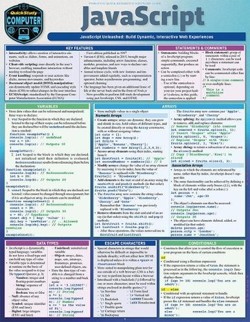
JavaScript
Loading...
The Go Programming Language, The
Loading...
Python for Finance 2e
Loading...

Kill It With Fire
Loading...
Beginning C++ Game Programming
Loading...